Neighbor Zero Bet: How Do You Place It?
The neighbor zero bet is a five-chip wager on the European single-zero wheel that covers the zero alongside its two immediate neighbors on each flank—the 3, 12, 15, 26, 32, and 35 pockets in the most common configuration. You place it by physically announcing the call to the dealer rather than dropping chips on the felt, which is exactly why most casual players never touch it. The mechanic is a call bet, not a standard placement, and that distinction trips up rookies who assume every wager lives inside those painted boxes.
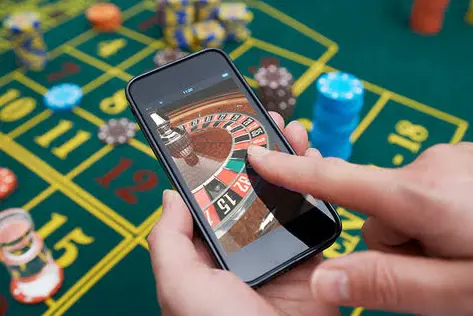
The Physical Placement Sequence
You push five single chips forward and state the call clearly: neighbor zero, or neighbours of zero. The dealer confirms, sweeps the chips, and stacks them on the zero's outer rim to mark your position. From that moment the wager is locked—you cannot retract it once the ball is in motion. The payout structure splits three ways: the zero itself pays 35 to 1, the two adjacent numbers on the track pay 17 to 1, and the outer pair of that five-number arc pays 11 to 1. That uneven ladder is the whole point of the neighbor zero bet, and it is also why the house edge stays identical to every other wheel wager at 2.7 percent. Do not let anyone convince you this call carries a softer margin; the math does not bend for fancy placement. 🎰
Track Geometry and Why Placement Order Matters
The wheel track is a loop, and the five-number arc wraps around the physical rim rather than following the numerical sequence printed on the felt. The zero sits between 32 and 26 on the standard European layout, so your neighbors are 32 and 26—not 1 and 36 as the felt grid might suggest to an untrained eye. If you place the call using the felt grid logic, you get a completely different cluster and a completely different risk profile. The dealer works from the physical track, always. Get that wrong and you are not placing the wager you think you are placing. This is where sharp players separate from the herd, because the neighbor zero bet rewards track literacy and punishes felt-only thinking. 🔍

Call Bet Etiquette and Dealer Confirmation
Never toss chips mid-air and mumble. Call bets require verbal clarity before the spin, and a good dealer will repeat the call back to you. Wait for that echo. If the response is garbled or you hear a different number set, kill the bet immediately—reclaim before the ball drops. Some houses restrict call bets to minimum-chip thresholds, and the neighbor zero call consumes five units, so check the table minimum against your stack. A five-unit minimum at a ten-dollar floor means fifty dollars a spin, and that bleeds fast on a cold wheel. The neighbor zero bet is a precision tool, not a volume play; treat it like a sniper round. 💰
Payout Mechanics and Variance Reality
The five chips never pay as a flat block. Three of them sit on the zero and its direct flanks, earning either 35 or 17 to 1 depending on which pocket lands, while the two outer chips earn 11 to 1. A zero hit returns 175 units on a 5-unit stake in the cleanest configuration—that is 35 to 1 on a single chip plus the surrounding payouts stacking in your favor. Miss the arc entirely and you lose all five at once. This is a high-variance, low-frequency wager: the arc covers roughly 13.5 percent of the wheel, so expect long droughts between hits. Budget accordingly and never chase the arc after two cold spins. The geometry does not owe you a correction.
Hardware and Dealer Angle Subtleties
Wheel bias is the quiet factor nobody audits properly. On a slightly tilted European wheel, the zero arc can drift hotter or colder than the theoretical 13.5 percent, and that drift is exactly what a track-savvy player hunts. Log every neighbor zero result across a few hundred spins and compare the observed frequency against expectation; a two-percent deviation over a large sample is a signal, not noise. Combine that with dealer release consistency—some croupiers spin with a predictable rhythm that clusters the ball—and the call bet stops being a blind wager. It becomes a data play. That is the entire edge, and it lives in your notebook, not in the felt.